PMBoardNews

Version 2: Datagotchi Labs

As I founded my R&D company, Datagotchi Labs, I decided to work on PMBoard again with the belief that new technologies should be created if and only if they provides users with value. However, startups are incentivized by people with money (investors and paying customers) because they need to be able to pay their employees. Therefore, most startups offer free apps/services to end users so they can turn them into the products to be sold to advertisers.

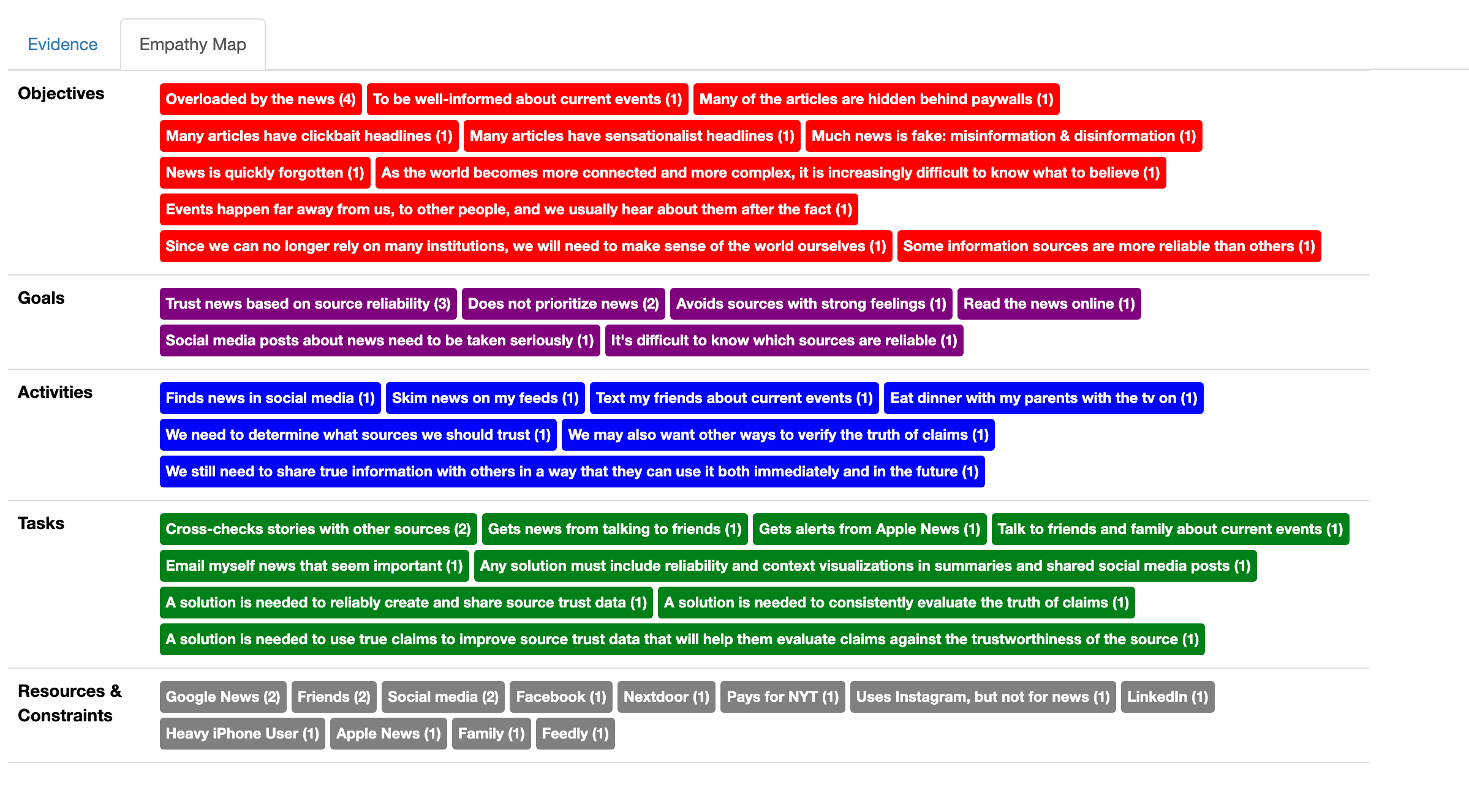
Instead, the needs and desires of all product stakeholders need to be understood and synthesized when creating and improving products. Therefore, my new approach is to visualize stakeholder UX research in the form of empathy maps and product visions as journey maps created from those empathy maps.

The empathy maps used means-ends hierarchies from cognitive work analysis that I learned in my government R&D days, which map high-level objectives to goals to achieve the objectives, to activities to achieve the goals, tasks to achieve the activities, and resources/constraints to achieve the tasks:
I have started on a widget to create journey maps that cite these empathy maps, but have not finished it yet, therefore it’s still in progress (no image available at this time).
Version 1: Social Ergonomics

There is so much information involved in the creation of new products, as well as through minimum viable product (MVP) iteration and eventually growth. However, startups and R&D teams rarely collaborate enough to effectively harness this information.

Therefore, a friend of mine and I founded Social Ergonomics, a consulting firm for startups and other companies in the San Francisco Bay Area in California, to enable them to act as Integrated Product Teams (IPTs), a concept I learned from my government R&D days.

IPT members need to do:

  • Stakeholder research to deeply understand the problems and the stakeholders affected by them so that they can make smart decisions when the answers aren’t obvious — over time as stakeholders and their contexts change.
  • Market research to be able to explain why their solution is better than all other possible solutions.
  • MVP iteration to commercialize their product / find problem-solution fit and product-market fit
    • To be able to evaluate whether users resonate with their solution enough to evangelize it to others (p-s fit)
    • To be able to evaluate whether people are willing to pay for their solution, and keep using it and paying for it over time as it remains useful (p-m fit)

To support these needs, we created a tool we called PMBoard and made it open source on GitHub.com: https://github.com/bobness/pmboard

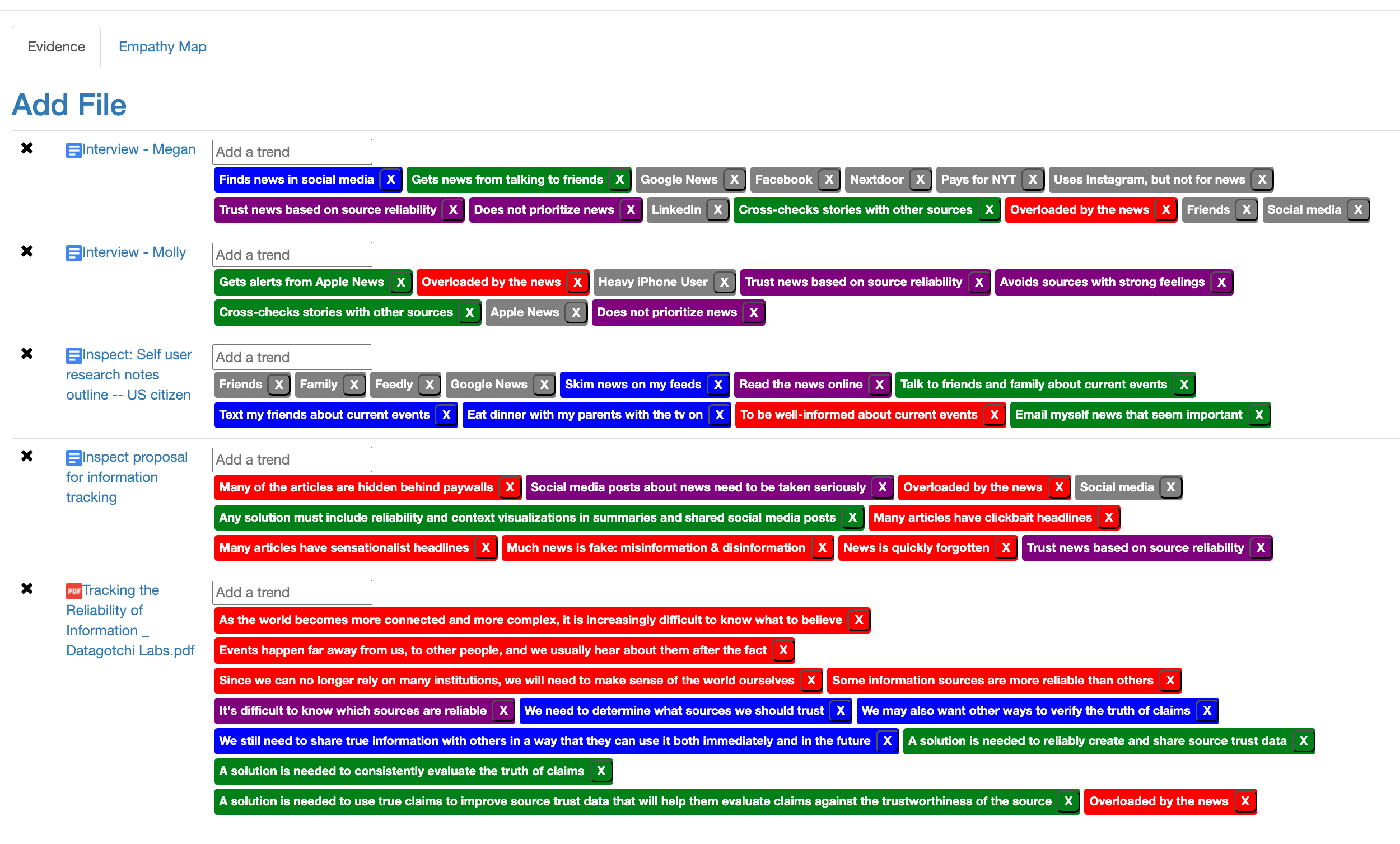
  • For stakeholder research, it includes a widget to link Google Documents and tag them with insights.
  • For market research, we envisioned a widget to link research insights with user journeys.
  • For MVP iteration, we envisioned a widget to link research insights and user journeys to designs and software prototypes and user analytics data.

However, we never got around to the last two widgets. So the tool to tag user research looked like this: