Based on the strategic diagnostics gathered from the version 1 mobile prototype, I engineered a second architectural iteration designed to systematically mitigate information overload and eliminate platform friction.
Core Architectural Shift: Cloud-Based Persistence
To bypass the “platform resistance” discovered in Version 1—where users rightfully rejected downloading separate mobile apps for intermittent tasks—I migrated the system infrastructure to an accessible, cross-platform web topology.
- The Transition to Next.js: I refactored the original Node.js backend into a highly responsive, unified Next.js web application matrix.
- Cloud Ingestion Sandbox: Users could instantly ingest online content links directly into a secure cloud backend simply by copying browser URLs into the system, bypassing traditional ecosystem silos.
- Deterministic Insight Declarations: I built explicit workflows to manually declare complex insights as core assertions. Users could generate a blank macro-insight and dynamically map empirical data parameters straight to it.
Interface Engineering: Complex Data Aggregation
To address the sheer velocity of daily media streams, the interface was optimized to let users bind multiple content links into unified, high-context insight repositories:
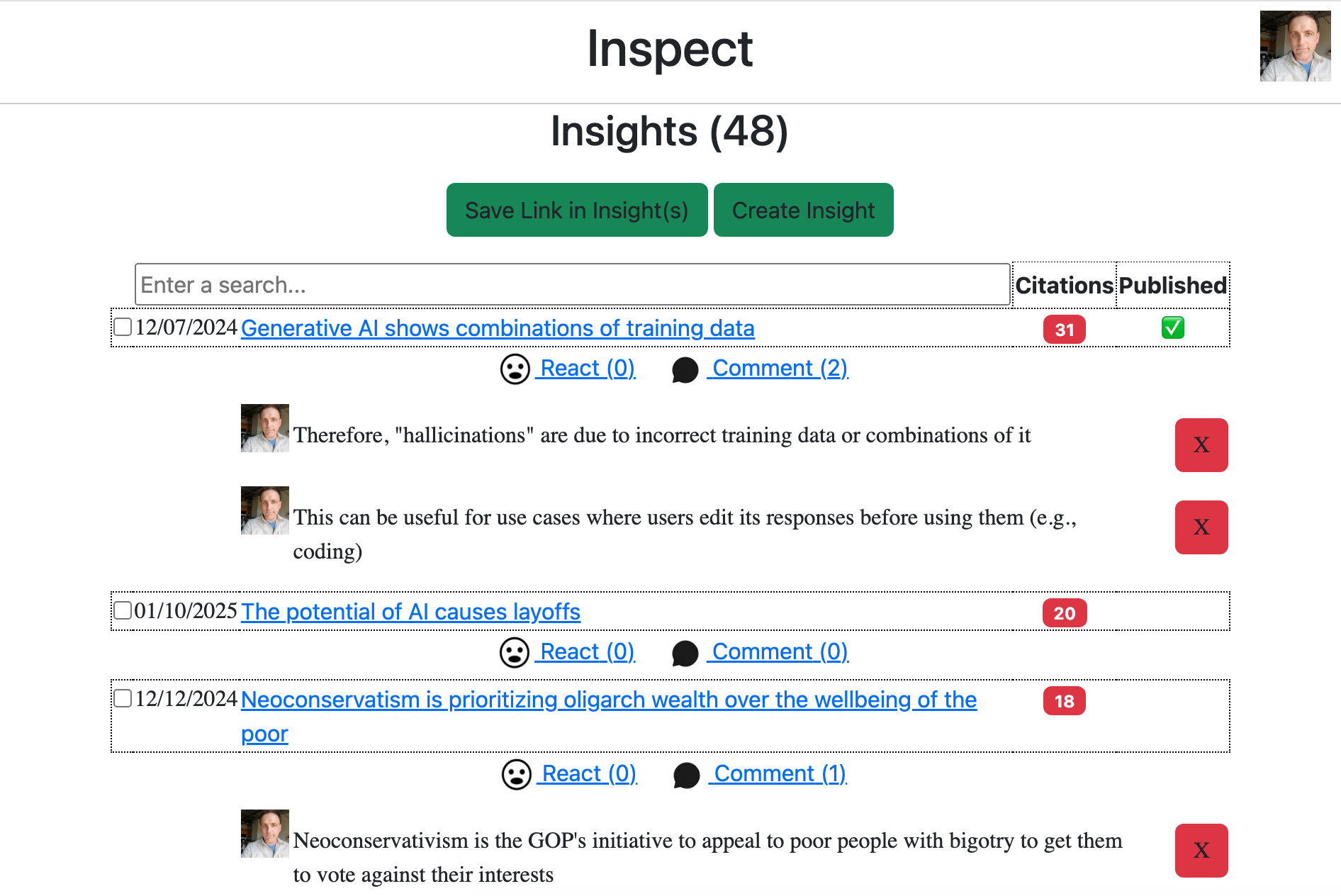
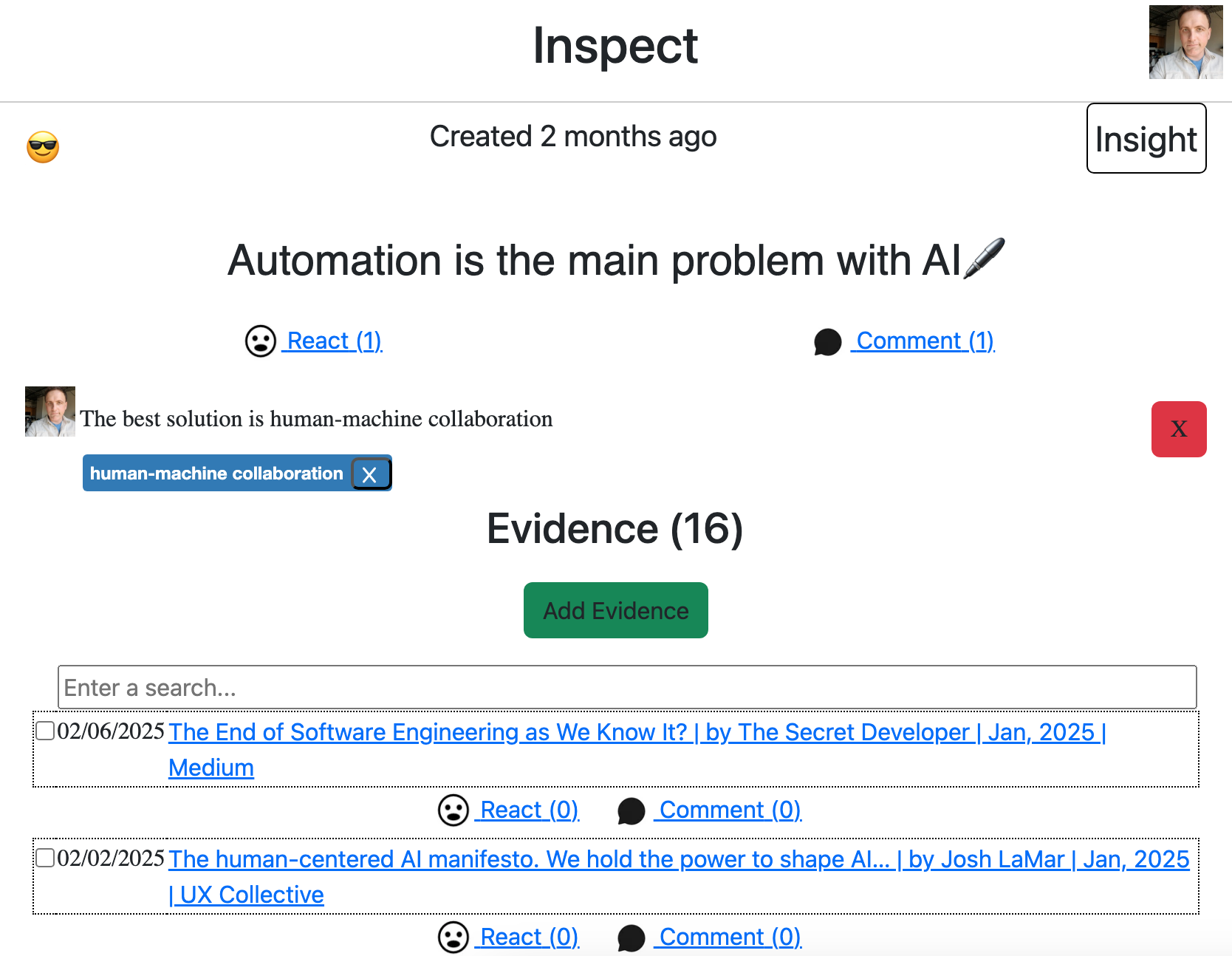
- Evidence Binding Arrays: Built modular UI structures allowing users to rapidly select multiple ingested URLs from a dynamic dialog menu and bind them directly into a single, cohesive conclusion.
- Multi-Threaded Cross-Citations: Engineered advanced UX pathways to manipulate structural data on the fly. Users could select specific citations within an insight, extract them, and cross-reference them directly into other expanding system models.
- Granular Semantic Layering: Implemented interactive commenting and text-highlight tagging systems. This allowed users to isolate the core causal variables of a specific news link, tag the top-level assertions, and bubble those insights up to public-facing networks via a single-click publishing protocol.
The resulting web application is pictured below:
Critical Discoveries from the Web Sandbox
Publishing this web platform and stress-testing it against live news cycles and complex technical streams revealed profound new insights into user cognitive limits:
- The Ingestion Process Debt: Manually collecting individual news articles as they appear online to curate and compile them later into insights requires massive, unsustainable human labor.
- The Communication Barrier: While the raw infrastructure functioned perfectly, communicating complex, surprising, and high-consequence system patterns to an outside audience via text lists remained incredibly difficult.
- The Text-Overload Paradox: While comments and text-highlight tags were highly effective at explaining what an insight meant, they inadvertently generated an overwhelming wall of dense prose. The interface was still causing user cognitive fatigue—it had merely shifted the overload from the original news feed to the application’s own text commentary.
- The Relational Deficit: A flat vertical list of insights, comments, and tags is a failed interface substrate for system dynamics. It tracks the individual data points but fails to visually show how those points relate, why they interact, or how a macroeconomic shock ripples through a community network.

